The evolution of the NBA dress code
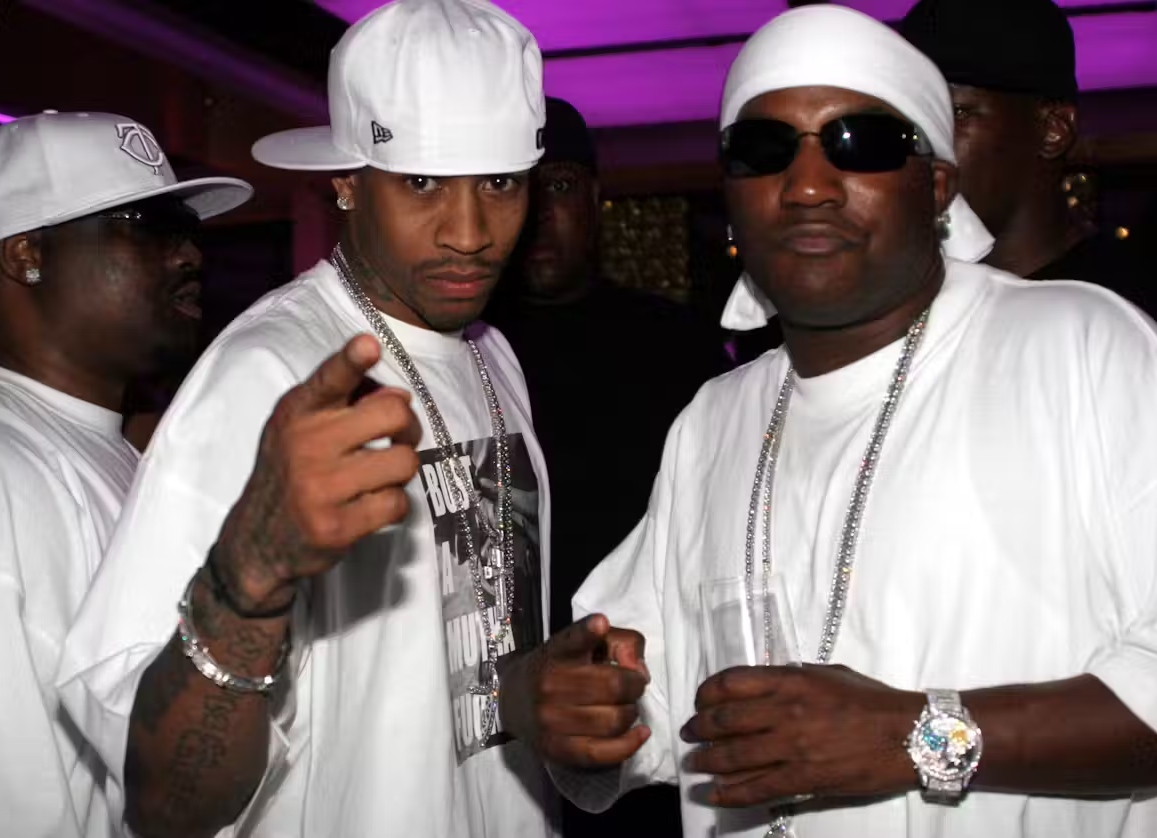
Allen Iverson and Young Jeezy in Los Angeles, Calif. in 2005. (Johnny Nunez // Getty Images)
In the early 2000s, Allen Iverson didn’t just change the game with his crossover, he changed the way people showed up to the court. From oversized jerseys to chunky chains, his court-side fits brought hip-hop culture to the NBA.
Enter Commissioner David Stern’s dress code in 2005, which banned such attire and required business casual clothing at game arrivals and departures, on the bench and during all official NBA business.
Two decades later, thanks to the NBA Bubble, the tight sartorial grip has loosened, allowing players to define court side style on their own terms. What started as a crackdown on ‘unprofessional dress’ has become a runway for identity.
Pre-2005, NBA fashion culture was closely intertwined with hip-hop and streetwear trends. Donned by sports icons like Iverson and Shaquille O’Neal, it featured baggy pants, durags and sneakers or Timberland-type boots.
2004s ‘Malice at the Palace’ incident was a major catalyst for Stern’s dress code implementation the following season. At the Detroit Piston’s home court, a fight broke out between Pistons and Indiana Pacers players, quickly involving spectators in the stands. The fight yielded legal charges and a total of nine player suspensions.
Stern’s dress code not only required business casual attire, but explicitly banned hip-hop-esque attire. He explained that the intention was to reverse the negative commentary the league was receiving after the incident.
“Images that ran were run in the context of a condemnation of all NBA players, and that really upset me. That became a critical flashpoint. And so we've got to dig out from under that,” said Stern on the incident.
However, many critics and players found the dress code to be racially motivated, given that it specifically targeted clothing emblematic of hip-hop style, worn primarily by young Black players.
“One thing to me that was kind of racist was you can't wear chains outside your clothing. I don't understand what that has to do with being business approachable…you wear a suit you still could be a crook,” said Jason Richardson of the Golden State Warriors.
Allen Iverson, who is seen in retrospect as an originator of the style within the NBA, had a similar take.
“Just because you put a guy in a tuxedo, it doesn't mean he's a good guy,” he said.
When Adam Silver took over as commissioner in 2014, he allowed the dress code to become gradually more relaxed, assisted largely by rules of the NBA Bubble in 2020, which allowed coaches to wear athletic clothes on the sidelines.
Despite this, many players still elect to wear tailored suits and designer menswear — sometimes hiring personal stylists or entering partnerships with luxury brands. The concept of wearing a suit to the game pivoted from being a requirement to another form of self expression.
“Tunnel fits are a huge part of basketball culture … and players choosing to wear certain brands off the court really helps with the popularity of those brands. It’s a really coveted space for the fashion industry,” said Bryan Kalbrosky, senior NBA staff writer at For the Win.
The NBA’s journey from policing players’ attire to celebrating personal style mirrors the league’s turn towards embracing individuality and cultural influence. What began as an attempt to control image has become a space for players to shape trends and redefine what professionalism looks like in sports.